

Covid 19 Notice: Face masks are required in all our facilities Read More

What colour is this apple? Most of us would say red, but do we all see the same red??

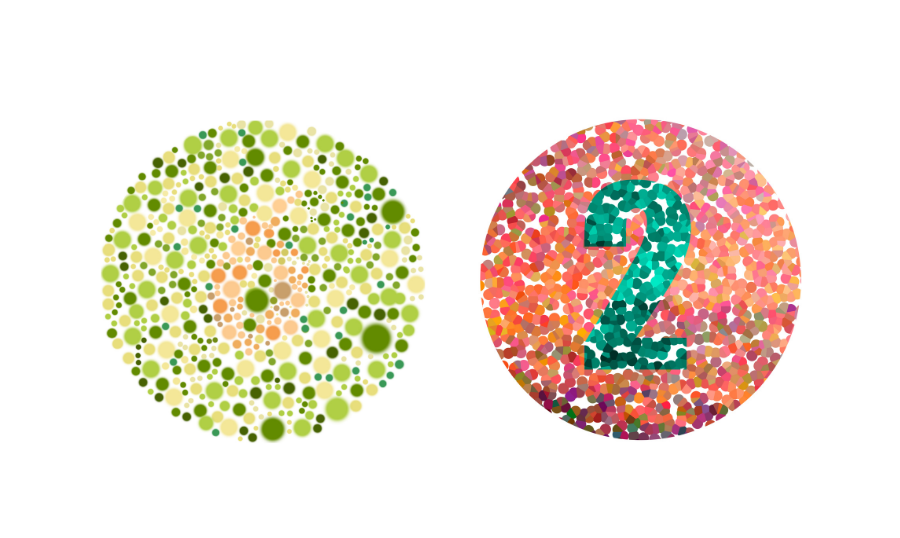
While most of us share a common vision sensory experience, some people’s perception of colour is different from what the majority of us see, which is referred to as ‘colour blindness’. While it is hard to imagine a world with limited colour, being colour blind is not as rare as you think. Since colour vision deficiencies are usually caused by a recessive gene disorder carried on the X chromosome, men are much more likely to be affected by colour blindness than women. In fact, approximately 1 out of 12 men are affected by colour blindness. If you are female, The probability of being born colour blind is much lower because a functional gene on only one of your X chromosomes is enough to make up for the loss on the other, which means only 1 out of every 200 women are colour blind.

Colour Blindness - Not Always Black and White

Despite what some of us might imagine, being ‘colour blind’ doesn’t simply mean that the person sees their world through a monochromatic film noir lens. In fact, there are several types of inherited colour blindness. While some people are unable to see any colour from birth, referred to as ‘monochromacy’, this condition is extremely rare. However, most colour-blind people are able to see things clearly but are unable to tell the difference between red or green, which is the most common type of colour blindness.

The Silver Lining?

While being colour blind may affect one’s career choices and can also create daily challenges when it comes to differentiating electrical wires or choosing and preparing foods, there are some studies which conclude that colour blind individuals are better at penetrating certain camouflages. Since these individuals lack certain colour receptors, some colour-blind individuals have an enhanced ability at recognising unnatural patterns in the midst of natural ones and can become adept at picking up on textures and light. Because of this enhanced visual ability, colour blind men in World War II were considered an advantage due to their inability to see green; which in turn helped them to see camouflage patterns.

Eye Fun Facts Friday, 15 Jun 2018

Read More

Sophisticated tech, unparalleled results – meet Auckland Eye’s new SMILE Pro laser
NewsNewsThursday, 20 Apr 2023

Sophisticated tech, unparalleled results – meet Auckland Eye’s new SMILE Pro laser

What if you could improve your vision in just 15 minutes? That’s the promise of Auckland Eye’s new SMILE Pro laser – a major step forward in eye-care.

Covid-19 Update
NewsNewsMonday, 13 Feb 2023

Covid-19 Update

Most recent Covid-19 update and what it means for our clinics and patients.

Auckland Eye appoints NZ’s second-ever ocular oncologist
NewsNewsTuesday, 20 Dec 2022

Auckland Eye appoints NZ’s second-ever ocular oncologist

Dr Riyaz Bhikoo – 5-star patient care, international experience and rare specialisation.

Request a Callback

or

Select your preferred location